

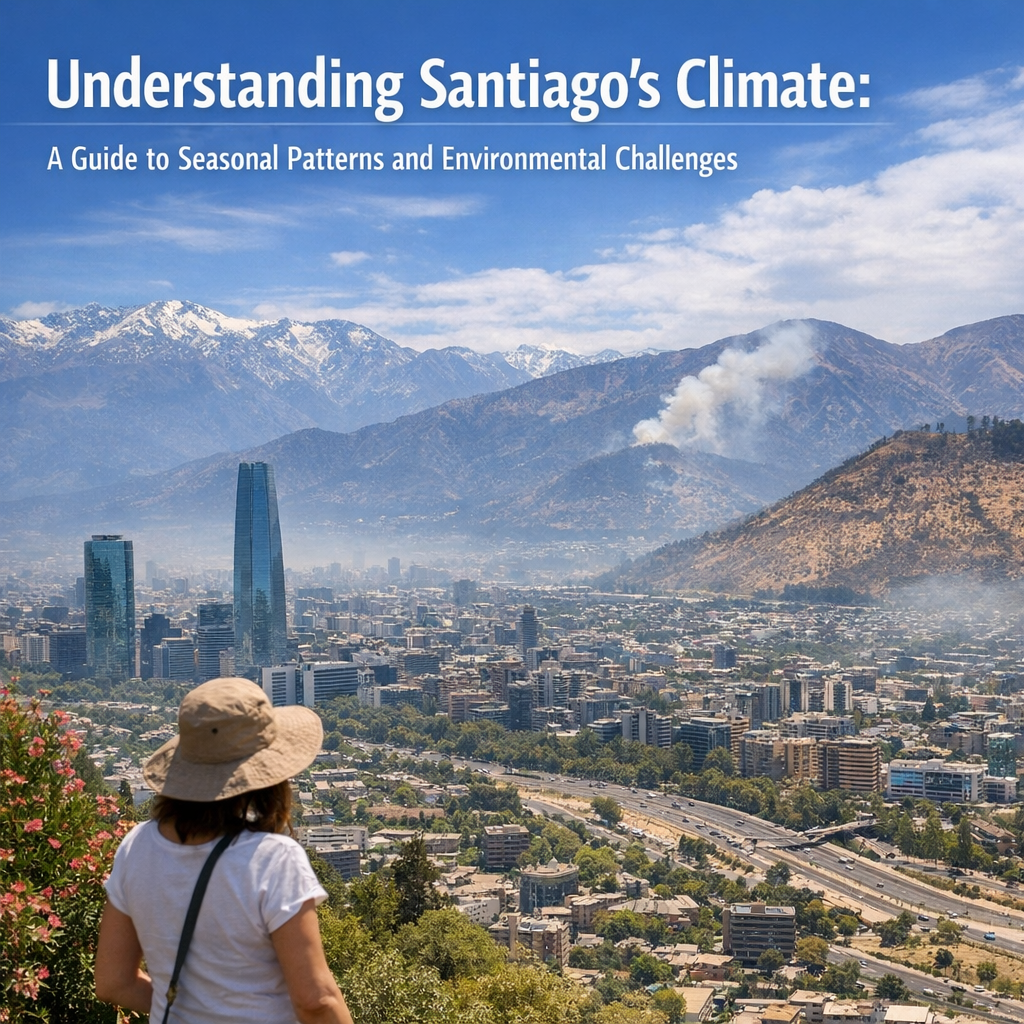
Santiago, the capital of Chile, is renowned for its Mediterranean climate, characterized by warm, dry summers and cool, wet winters. This climatic pattern significantly influences the city’s environment and daily life.
Seasonal Overview
Summer (December to March)
During summer, Santiago experiences high temperatures, often reaching up to 30°C (86°F). The season is marked by clear skies and minimal rainfall, creating ideal conditions for outdoor activities. However, the intense sun necessitates precautions against UV exposure.
Winter (June to August)
Winters are cooler, with average high temperatures around 11.4°C (52.5°F) in July. This period brings the majority of the annual rainfall, averaging 43mm (1.69 inches) per month. The increased precipitation contributes to the snowpack in the Andes, benefiting winter sports enthusiasts.
Spring and Autumn
Spring (September to November) and autumn (April to May) offer mild temperatures and lower rainfall, providing comfortable conditions for residents and visitors alike.
Environmental Challenges
Air Pollution
Santiago faces significant air pollution issues, particularly during winter months. The city’s geography, surrounded by mountains, can trap pollutants, leading to smog and health concerns. Efforts to improve air quality are ongoing, but challenges remain.
Water Scarcity
Water scarcity is another pressing issue, exacerbated by prolonged droughts and increased demand. Sustainable water management practices are crucial to address this challenge and ensure a reliable water supply for the city’s population.
Understanding Santiago’s climate and environmental challenges is essential for residents and visitors to adapt and contribute to the city’s sustainability efforts.