

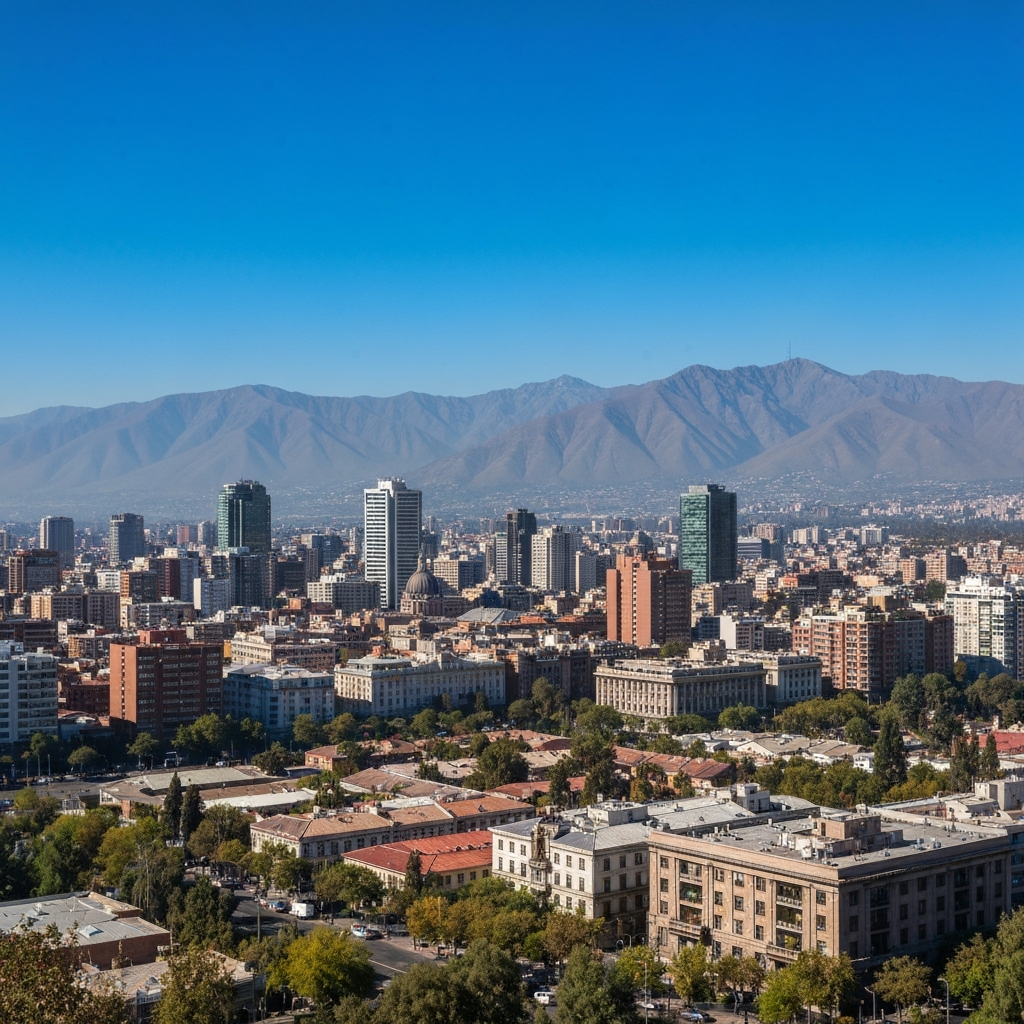
Santiago, the capital of Chile, is renowned for its Mediterranean climate, characterized by warm, dry summers and mild, wet winters. This climatic pattern significantly influences the city’s environment and the daily lives of its residents.
Seasonal Overview
Summer (December to March)
During the summer months, Santiago experiences high temperatures, often reaching up to 30°C (86°F). Rainfall is scarce, contributing to arid conditions. The low humidity levels make the heat more bearable, but the intense sun requires precautions against UV exposure.
Winter (June to August)
Winters are cooler, with average high temperatures around 11.4°C (52.5°F) in July. This season brings the majority of the annual rainfall, averaging 43mm (1.69 inches) per month. The increased precipitation is vital for replenishing water sources but can also lead to challenges such as flooding in certain areas.
Environmental Challenges
Air Pollution
Santiago faces significant air pollution issues, particularly during winter. The city’s geography, surrounded by mountains, can trap pollutants, leading to smog and poor air quality. This situation often results in increased respiratory problems among residents. Efforts to mitigate pollution include promoting public transportation and implementing emission controls.
Water Scarcity
Despite the winter rains, Santiago has been experiencing water shortages. Factors contributing to this issue include prolonged droughts and the privatization of water resources. These challenges have led to protests and calls for policy reforms to ensure equitable water distribution.
Adapting to Climate Variability
Understanding Santiago’s climate patterns is essential for residents and visitors alike. Staying informed about seasonal changes and environmental challenges can help individuals make informed decisions, from daily activities to long-term planning. Community initiatives and government policies continue to evolve to address these environmental concerns, aiming to improve the quality of life in Santiago.