

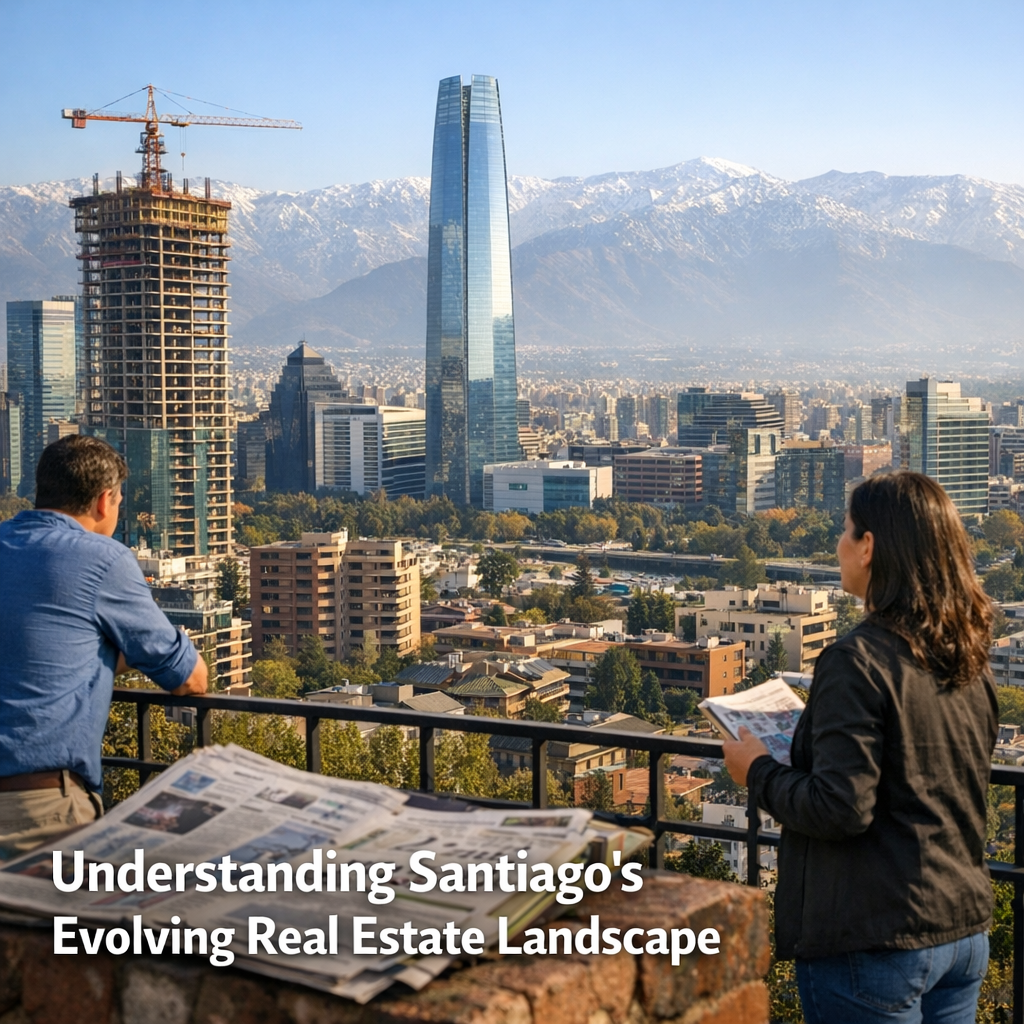
Santiago’s real estate market is undergoing significant transformations, influenced by shifts in buyer preferences, rental dynamics, and urban development.
Home Buying Trends
Recent analyses indicate a notable shift towards purchasing homes for personal use rather than investment. This change is driven by improved mortgage conditions and available subsidies, leading to a 6.9% increase in sales, totaling 5,260 units. Notably, the house market experienced a 42.5% growth, with peripheral communes like Lampa, Colina, and Melipilla witnessing sales doubling. This trend underscores a structural move towards homeownership.
Rental Market Dynamics
The rental sector in Santiago is characterized by high demand and low vacancy rates. The multifamily rental market, comprising buildings designed exclusively for renting, has matured and expanded. Occupancy rates have surpassed 95%, with a slight quarterly decrease of 0.5 percentage points, yet remaining above stabilization thresholds. The average rent per unit stands at 10.93 UF, reflecting a gradual recovery in rental income.
Geographically, the eastern sector of Santiago commands the highest rental prices, averaging 24 UF per unit, approximately $910,000 CLP monthly. In contrast, central and peripheral areas like Estación Central, Independencia, and Renca offer more affordable options, with rents around 10.83 UF, or about $410,000 CLP.
Local Development and Urbanization
Urban densification, internal and external migration, and evolving lifestyles have spurred demand for rental housing, particularly in multifamily formats. Despite 26.2% of Chilean households renting, only about 5% are in multifamily projects, indicating significant growth potential. This model offers benefits such as professional management, economies of scale, and enhanced amenities, appealing to a diverse tenant base.
In summary, Santiago’s real estate market is adapting to changing demands, with a clear inclination towards homeownership and a robust rental sector. These developments present opportunities for buyers, renters, and investors navigating the city’s dynamic property landscape.