

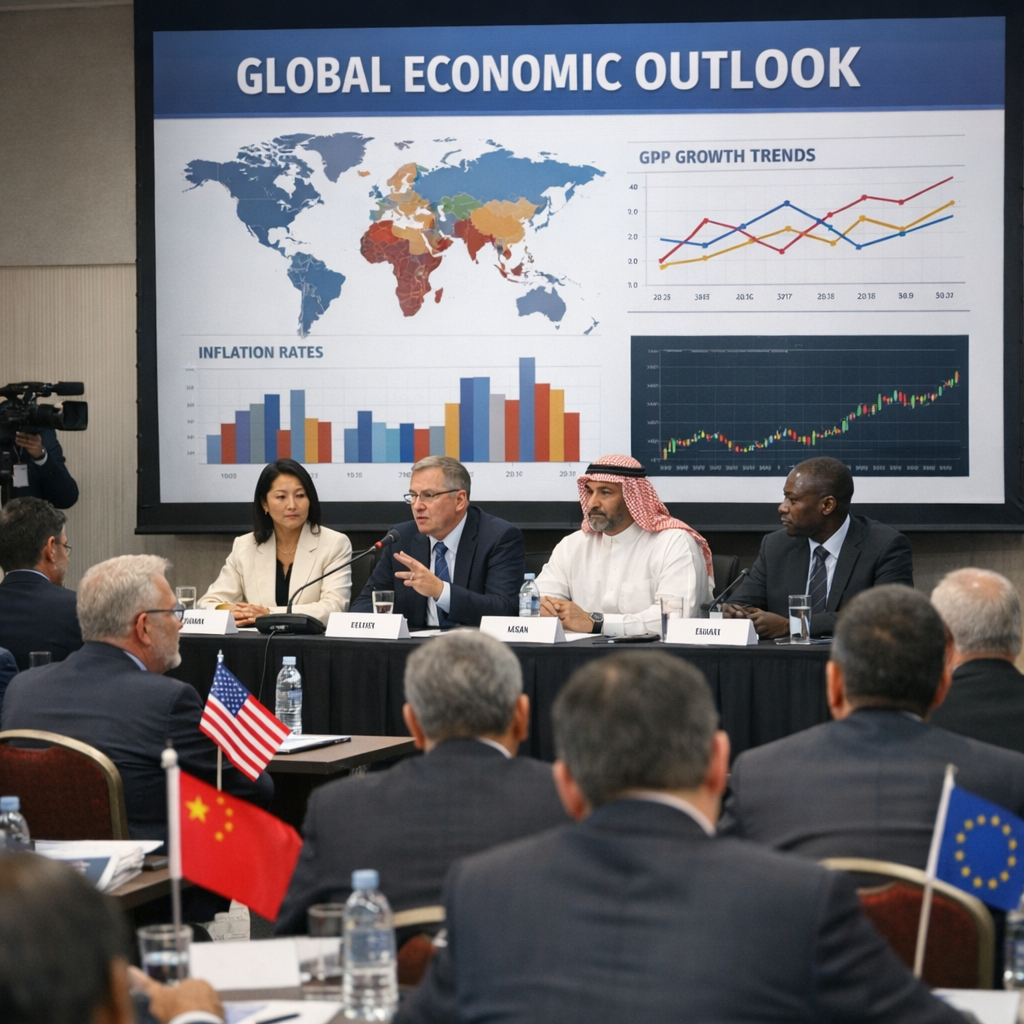
The global economy is currently navigating a complex landscape marked by geopolitical tensions, technological advancements, and fluctuating energy prices. These factors collectively influence economic growth, inflation rates, and trade dynamics worldwide.
Global Economic Overview
According to the International Monetary Fund (IMF), global growth is projected at 3.0% for 2026 and 3.4% for 2027. This outlook reflects a balance between the positive momentum from technological investments, particularly in artificial intelligence (AI), and the negative impacts of geopolitical conflicts, notably in the Middle East. The IMF notes that while AI-driven demand is boosting economies integrated into the global technology value chain, energy importers and vulnerable economies are facing challenges due to the ongoing war shock.
Regional Highlights
In the United States, consumer spending and capital expenditures on AI are likely to drive moderate growth as global inflation slows. Morgan Stanley forecasts that annual global economic growth may moderate to 3% in 2025 and 3.2% in 2026, before stabilizing in 2027, helped by resilient consumption and capital spending. The global trend of declining inflation was interrupted by higher energy prices but should resume in 2027, though oil and gas supplies may take months to normalize.
Europe is experiencing slower growth, with the eurozone projected to grow at 0.8% in 2026, as reported by Kiplinger. This stagnation is attributed to rising energy costs and geopolitical uncertainties. In contrast, India is expected to lead Asia with robust 6.4% growth, propelled by strong consumer demand, positioning it to surpass Japan economically.
Implications for Chile
Chile’s economy is intricately linked to global markets, making it susceptible to these international trends. The rise in global energy prices, stemming from Middle East conflicts, could lead to increased import costs for Chile, affecting both consumers and industries reliant on energy. Additionally, fluctuations in commodity prices, particularly copper, a significant export for Chile, may impact national revenues and economic stability.
On a positive note, the global emphasis on AI and technological investments presents opportunities for Chile to enhance its technological infrastructure and integrate more deeply into the global tech value chain. By fostering innovation and investing in technology, Chile can position itself to benefit from the global shift towards digitalization.
Conclusion
Staying informed about global economic developments is crucial for understanding their potential impacts on Chile. While challenges such as rising energy costs and geopolitical tensions pose risks, opportunities in technological advancements offer avenues for growth and resilience. Proactive policies and strategic investments will be key in navigating these global economic currents.