

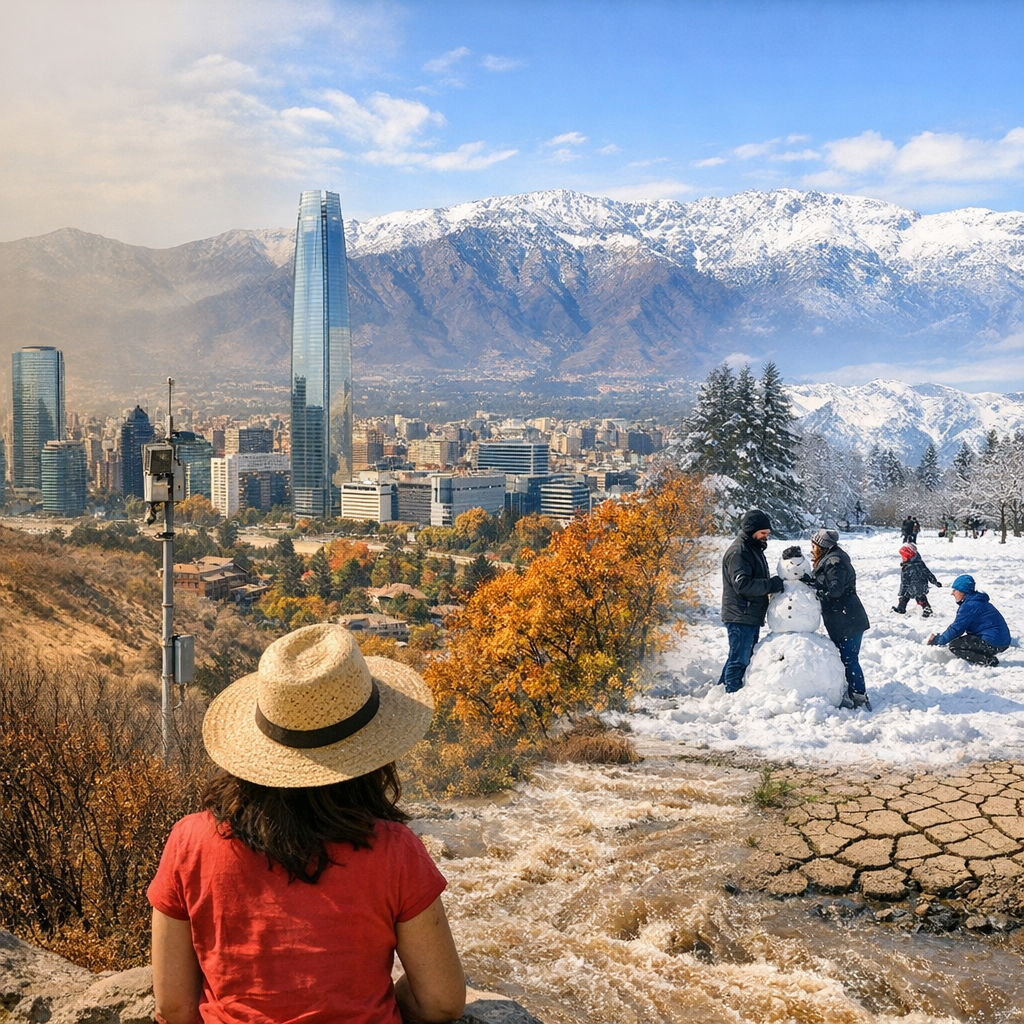
Santiago, the capital of Chile, is renowned for its Mediterranean climate, characterized by distinct seasonal variations that influence daily life and the environment. Understanding these patterns is essential for residents and visitors alike.
Seasonal Overview
Summer (December to February)
During summer, Santiago experiences warm and dry conditions, with average high temperatures ranging from 29°C to 34°C. Rainfall is scarce, making it an ideal time for outdoor activities. However, the intense sun requires precautions against UV exposure.
Autumn (March to May)
Autumn brings milder temperatures, with highs between 16.6°C and 24.2°C. Rainfall begins to increase, especially in May, marking the transition to the wetter season.
Winter (June to August)
Winters are cooler and wetter, with average highs around 11.4°C in July. This period sees the most substantial rainfall, contributing to the region’s water resources. Snowfall is common in the Andes, offering opportunities for winter sports.
Spring (September to November)
Spring sees a gradual warming, with temperatures rising from 15.5°C in September to 20.8°C in November. Rainfall decreases, and the city blooms with vibrant flora.
Environmental Challenges
Despite its favorable climate, Santiago faces environmental challenges exacerbated by climate change. Prolonged droughts have led to water scarcity, impacting agriculture and daily life. Experts emphasize the need for integrated water management and improved governance to address these issues. Initiatives like the “Retorno Maipo” project aim to reuse treated water to support agriculture during extreme droughts, benefiting thousands of farmers.
Additionally, the uneven distribution of urban greenery has created a “green gap,” where affluent areas have more vegetation compared to vulnerable communities. This disparity affects not only the environment but also public health, as green spaces are crucial for mitigating heat and improving air quality.
Looking Ahead
As Santiago continues to grapple with these environmental challenges, it’s imperative for both authorities and citizens to engage in sustainable practices and support policies aimed at climate resilience. Understanding the city’s climate patterns and their implications is a vital step toward fostering a more sustainable and equitable urban environment.